





Then
Set along the Colorado River at the base of Mount Bonnell, Laguna Gloria began as a landscape shaped by water, wildlife, and generations of human connection. Before Austin expanded westward, the area was defined by natural springs, limestone cliffs, and open prairie. For centuries, Native American tribes, including the Comanche, traveled through the corridor, relying on the springs as a dependable water source, even during droughts.
By the 1840s, settlers recognized the site’s advantages. In 1846, a small Mormon community established one of Austin’s first mills here, using spring water to power grinding and lumber production. Although flooding eventually ended the operation, the area continued to attract residents and visitors. By the mid-19th century, Mount Bonnell and the surrounding riverbanks had become popular destinations for picnics, gatherings, and scenic overlooks of the Colorado River Valley.
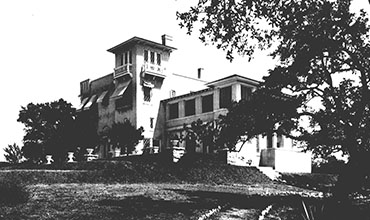
In 1914, Clara Driscoll returned to Texas after years in Europe. Known for helping preserve the Alamo, she and her husband, Hal Sevier, selected a 28-acre tract overlooking the river and hired architect Harvey L. Page to design an Italian-inspired villa. Completed in 1916, the roughly 15,000-square-foot home featured stucco walls, arched openings, asymmetrical stonework, and sweeping terraces. Details including a carved panel made from Alamo rafters and a limestone window inspired by Mission San José reflected Driscoll’s commitment to Texas history. In 1943, she donated the property to the Texas Fine Arts Association.
Now
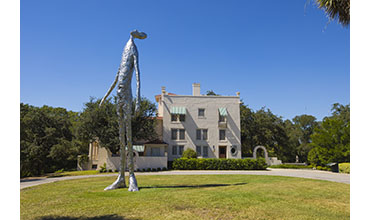
Today, Laguna Gloria, operated by The Contemporary Austin, is a 14-acre museum campus where contemporary art is integrated throughout the historic estate. Following a 2011 merger with the Jones Center and a 2013 rebranding, the site underwent continued updates, including shoreline stabilization projects and expanded outdoor exhibition space.
Sculpture and installation art are central to the experience. Visitors encounter Tom Friedman’s 33-foot stainless steel sculpture “Looking Up,” installed in 2015, alongside “Miffy Fountain” by Tom Sachs. On the terrace, SUPERFLEX’s “Lost Money” embeds thousands of coins into the surface, referencing the 2008 financial crisis. These works appear alongside historic pathways, gardens, and architectural features, creating a layered visual experience that connects the site’s past with its evolving artistic identity.
The grounds remain one of Laguna Gloria’s defining features. Formal gardens transition into wooded trails, including Lovers Lane, which leads to the Temple of Love overlooking Lake Austin. The Gatehouse Gallery hosts rotating exhibitions, while the villa continues to showcase original architectural details and lake views.
Laguna Gloria also serves as an educational hub and is home to one of the nation’s largest museum-affiliated art schools. The campus offers hundreds of classes annually for children and adults, along with seasonal programming and family-friendly events.
Tracie Seed is an Austin-based writer who is passionate about all things relating to family. She’s a maker and storyteller who shares whimsical art, sewing, and upcycling tutorials on her YouTube and TikTok channels, Freckled Fairy Upcycled. She enjoys spending time with loved ones and her fur babies, Roxy and Hazel.