




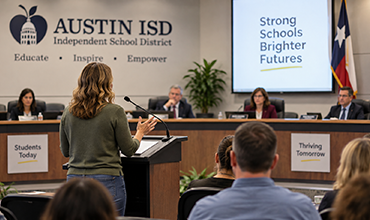
If you are a parent of a child in public school, you most likely know your child’s teacher. You should also know the principal, hopefully only for positive reasons, and you may even recognize the superintendent’s name. But do you know what your school district’s board of trustees does for your child, and why it is worth paying attention?
Unless you attend school board meetings, you probably do not have regular exposure to your district’s trustees. Yet the decisions made by a school board can have a significant effect on your family’s educational experience. Understanding what school boards do, and how you can participate, can help you become a more informed and engaged member of your school community.
School Board 101
School board trustees are locally elected officials responsible for governing the public school district they serve. In Texas, school boards set the district’s direction and policies and oversee district management, while the superintendent is responsible for day-to-day administration. The Texas Education Agency describes the board’s core responsibilities as adopting goals and policies, hiring and evaluating the superintendent, approving the budget and local tax rate, and providing oversight of district operations.
Trustees generally serve without compensation. They also receive required training on Texas education laws and rules. Beyond regular board meetings, trustees may serve on committees, attend school and community events, review extensive reports, and participate in professional development.
In Texas, eligibility requirements for a school board candidate include being a U.S. citizen, being at least 18 years old by the beginning of the term, meeting applicable voter and residency requirements, and not being disqualified by certain court findings or criminal convictions. Texas law also prohibits a person convicted of a felony or an offense involving solicitation of prostitution from serving as a school trustee.
School boards are governing bodies, not individual decision-makers for every school issue. A board acts as a body at properly called meetings, generally through a majority vote, and individual trustees do not have authority to direct campus staff or make decisions on behalf of the district on their own.
The Board’s Effect on Your Child
Trustees do not typically make school-level decisions, such as which teacher should be hired for an individual opening, what time the cafeteria should open, or how a routine student discipline matter should be handled. Those responsibilities generally belong to the superintendent, district staff, and campus administrators. That does not mean the board’s work is far removed from your child.
Consider your district’s school calendar. The board and administration must consider instructional requirements, holidays, staffing, transportation, and other factors before adopting a calendar. That decision determines when your child attends school, when breaks occur, and how the school year is structured.
The district budget is another example. Board decisions about funding can affect staffing, compensation, class sizes, programs, transportation, technology, facilities, and campus improvements. Policies adopted at the district level can also shape areas such as student conduct, curriculum, attendance, safety, and the use of school facilities. The exact impact varies by district, but the board establishes the framework within which schools operate.
How to Get Plugged In
The good news is that you do not have to attend every board meeting to become more informed. Start by finding your school district’s board webpage and bookmarking it or signing up for notifications. District websites typically publish meeting agendas, minutes, board policies, trustee contact information, and other documents. Many districts also provide meeting recordings or livestreams. Texas law requires districts to make trustee information available, including names, public email addresses, and terms of office.
Reviewing the board’s agenda can be especially useful. Agendas show what trustees will consider and vote on, from budgets and policies to facilities, staffing, calendars, and contracts. Start with the items that affect your family, then read the supporting materials when available.
If you have a question or concern, learn how your district accepts public input. Depending on the district and the issue, residents may be able to address the board during public comment, submit written comments, contact trustees, or participate through district advisory committees and other community engagement opportunities. Procedures vary, so check your district’s website before attending a meeting.
Parents can bring valuable firsthand perspective to discussions about students, schools, and families. At the same time, remember that trustees govern the district collectively, and individual board members cannot direct teachers, principals, or other employees. For a campus-specific concern, the appropriate first step is generally the school’s established administrative or grievance process.
Election Season and Beyond
School board elections are another way to participate in local education governance. In the greater Austin area, several districts have trustee elections on Nov. 3, 2026. Election schedules differ by district. Lake Travis ISD, for example, elects trustees to overlapping three-year terms. Eanes ISD also uses three-year staggered terms, meaning the entire board is not elected at once. Before voting, check your district’s official election page for current candidates, filing information, election dates, and voting details.
School boards may seem far removed from your child’s classroom, but they are an important part of local government and public education. Your trustees help establish policy, oversee the superintendent, approve the budget, and set the direction for the district. Taking a little time to understand what your board is considering, how it makes decisions, and how you can participate gives your family a clearer view of the forces shaping your child’s school experience.
Alison Bogle is a writer living in Austin with her husband and three children. A former fourth grade teacher, she now enjoys writing about children and education. You can also catch her talking about articles from Austin Family magazine each Thursday morning on FOX 7 Austin.