

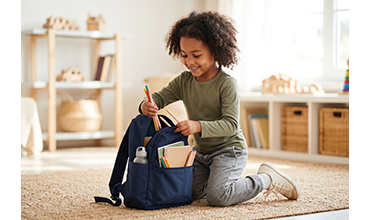
A school backpack can quickly become a portable collection of textbooks, homework, snacks, artwork, sports gear and forgotten crumbs. A properly fitted, thoughtfully packed backpack helps children carry what they need comfortably. An overloaded, poorly fitted or messy one can create unnecessary strain and clutter.
- Choose the Right Size
A healthy backpack starts with the right fit. The American Academy of Pediatrics recommends choosing a backpack appropriately sized for the child rather than buying the biggest bag available. Look for two wide, adjustable shoulder straps, a padded back, multiple compartments and, when appropriate, a chest or waist strap. The backpack should sit close to the body, with the bottom resting in the curve of the lower back.
For toddlers and preschoolers, think “tiny load.” A small backpack might carry a change of clothes, a communication folder, and a comfort item, if the school permits it. Adults should carry heavier items when practical.
- Keep the Weight Light
The AAP recommends that a backpack weigh no more than 15% of a child’s body weight. Aiming closer to 10% provides an additional margin for comfort, particularly for younger children.
A 70-pound child should ideally carry about 7 pounds or less, with 10.5 pounds considered the upper limit. A 100-pound student should aim for about 10 pounds, and carry no more than 15 pounds.
Watch the child, not just the scale. Leaning forward, struggling to put on the backpack, difficulty walking normally or complaints of shoulder, neck, or back pain are signs to reassess the fit and contents.
- Use Both Shoulder Straps
Children should use both shoulder straps rather than carrying a backpack on one shoulder. Adjust the straps so the backpack sits comfortably against the back without hanging too low.
Encourage older children to put on and remove the backpack using both straps. A chest or waist strap can provide additional support when included in the backpack’s design.
- Pack Only What Is Needed
Every backpack should have a purpose. Daily basics may include required school materials, homework, a communication folder, a filled water bottle, and lunch or snacks, according to school requirements.
After-school programs may require athletic shoes, a change of clothes, sunscreen, or activity-specific equipment. Keep these items in a designated compartment or separate tote rather than allowing them to live permanently in the backpack.
The healthiest backpack is not the one with the most supplies. It is the one containing what the child needs that day.
- Know What Belongs at School
Before sending anything to school, check the school’s current policies. Rules vary by campus regarding toys, electronics, food, medications, sports equipment, and other personal belongings.
Parents can help younger children learn the difference between school and personal items. A quick backpack check can prevent a toy, collectible, gadget, or other item that should stay home from accidentally making its way to school. As children mature, parents can gradually shift this responsibility to them.
- Create a Daily Backpack Reset
For younger students, parents may need to help check the backpack each afternoon. Teach a routine: homework out, lunchbox out, dirty clothes out, papers sorted, and tomorrow’s essentials back in.
Middle schoolers can take increasing ownership, while teens should generally manage their own bags, with occasional reminders or a weekly reset when necessary.
A simple routine helps prevent forgotten assignments, lunches, and school supplies. It also reduces emergency trips to school with something a child forgot.
- Empty and Clean it Regularly
Backpacks touch classroom floors, buses, playgrounds, and gym floors. Food and damp clothing can make them even less appealing.
Empty the backpack completely at least once a week. Remove trash, crumbs, old papers, forgotten food, and dirty clothing. Wash lunch containers and water bottles separately, and allow them to dry completely.
Follow the manufacturer’s cleaning instructions. Many fabric bags can be spot-cleaned, while some are machine washable. Clean spills promptly, and thoroughly when food leaks or it becomes visibly dirty.
- Give After-School Items Their Own Home
Sports equipment, dance shoes, art supplies, extra clothes and other after-school necessities can quickly overwhelm a backpack. When possible, keep these items in a separate, clearly labeled bag. Empty it when the activity is finished.
On Fridays, remove anything that does not need to travel back to school the following week. This keeps the backpack lighter and prevents forgotten gym clothes and snacks from becoming permanent residents.
- Know When to Replace the Backpack
A backpack does not automatically need replacing every school year. Replace it when it no longer fits, straps, or seams are damaged, zippers repeatedly fail, the fabric cannot be cleaned effectively, or the child has outgrown it.
When shopping, let children have a voice, but make fit and function the priorities. Look for durable materials, comfortable straps, appropriate sizing and compartments that encourage organization. A backpack should grow with a child’s needs, but it should not be so large that children are tempted to fill every available space.
- Create a Backpack Station at Home
Make the station part of the evening routine. The backpack comes home, gets emptied, is repacked at night, and returns to the same spot. To help children remember it, use the same sequence every day: pack, place by the door, check before leaving. A visual reminder near the exit can help younger children build the habit.
Eventually, the goal is fewer frantic mornings, fewer parent rescue missions, and a child who can manage this daily responsibility independently.
The Healthy Backpack Bottom Line
A healthy backpack is about more than the bag itself. It is about fit, weight, contents, cleanliness, and habits. Start children with age-appropriate responsibility, teach them what belongs in their backpack, and create a consistent place for the bag at home. With a few simple routines, the backpack can become one less source of school-year stress.
Anton Edward Cox is a nutritionist, husband, and a father of 6. He’s passionate about illness prevention with an aim to empower parents to build strong, healthy families.