





Then
The 1980s brought more to Austin than big hair and shoulder pads. That decade marked the beginning of the state capital city’s evolution into the Bat Capital of the U.S.
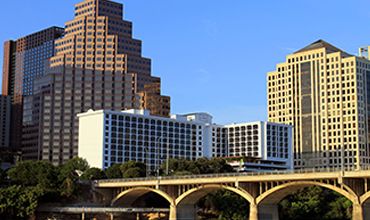
The transition began with the renovation of the Ann W. Richards Congress Avenue Bridge. During the project, engineers reinforced the structure with concrete beams, creating ideal nesting spots for migratory bats in the resulting cave-like crevices.
Soon after, thousands of Mexican free-tailed bats began swarming to the bridge in growing numbers, returning each spring from wintering in central Mexico. While the bats were cozy in their new home-away-from-home, many Austinites panicked, some petitioning to have their new nocturnal neighbors exterminated. The Austin American-Statesman’s headline on Sept. 23, 1984, was “Bat Colonies Sink Teeth Into City,” further fueling fear.
Swooping to the rescue was Dr. Merlin Tuttle, a scientist and bat enthusiast who founded Bat Conservation International. He moved to Austin in 1986 to educate residents and leaders about the pros of embracing its fang-bearing population, especially for their role in natural pest control and a healthy ecosystem. It’s hard to turn away creatures that can eat an average of 150 tons of mosquitoes each week!
Thanks to Tuttle and local conservationists, by the 1990s, Austin’s perspective had shifted from fear to fascination, and then, to a point of pride for the city.
Now
Today, the Ann W. Richards Congress Avenue Bridge is home to the largest urban bat colony not only in the nation but also in the world, with an estimated 1.5 million bats making this heart of downtown a home. And it’s growing! This maternity colony consists primarily of female bats, which give birth and raise an estimated 750,000 pups (baby bats) there annually. These bats can live up to 18 years.
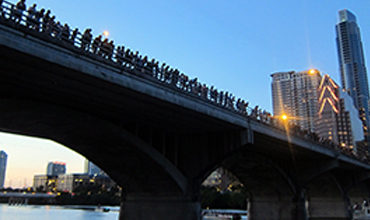
From March through November, the bats take up seasonal residence, emerging nightly just at sunset in a breathtaking flash mob. Since it can take up to 45 minutes for the entire colony to leave the bridge, bats may emerge anytime between 7:30 and 9:45 p.m.
There are several spots to watch this nightly performance. The Congress Avenue Bridge east side walkway offers a direct view as the bats fly eastward over Lady Bird Lake. Other notable areas are the Austin American-Statesman’s Bat Observation Area and the Butler Hike and Bike Trail, which provides multiple viewpoints along the lake, perfect for catching the twilight flight.
Bats have also become a significant economic contributor. It’s estimated that bat tourism generates millions of dollars annually for the city. Hotels, restaurants, tour companies, and souvenir shops all benefit from visitors hoping to catch a glimpse of the famous swarm.
Austin now celebrates its bat residents with pride. Bat Fest, held each August, features live music, food vendors, and a whimsical bat costume contest. Far from the fear of decades past, today’s Austin welcomes its weird, winged residents with open arms and eyes, full of excitement, fixed on the darkening sky.
Tracie Seed has won numerous awards for writing, art, and design. She is the happiest while writing, sewing, painting, or spending time with family.