



Many “pandemic babies,” children born during the height of the COVID-19 pandemic, are now entering formal school, raising the question of whether their unusual early experiences will affect their success in the classroom.
Thus far, research studies have been inconclusive about causality. However, anecdotally, a number of parents and teachers are reporting observed delays in language development, basic social skills, and emotional regulation in some children.
How Might the Pandemic Have Played a Role in Delays?
During their first years of life, children absorb a range of verbal and nonverbal inputs that are critical for developing emotional understanding, social constructs, and language. Children learn language by hearing it spoken frequently. During the height of lockdowns and social distancing, many babies and toddlers were exposed to fewer people and conversations than would have been typical before the pandemic.
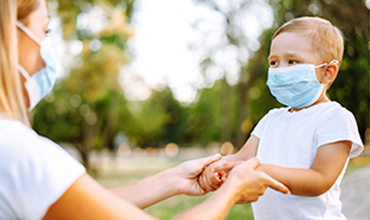
Children also learn to understand emotions and develop social skills by watching facial expressions and observing adult interactions. During the pandemic, mask wearing made it difficult to see facial expressions, and limited socialization further reduced opportunities for observation. This may have contributed to developmental delays.
Peer play and bonding with extended family were also affected during that time, limiting additional sources of visual, social, and emotional input.
How Might the Pandemic Have Affected Parenting?
For many parents of pandemic babies, the early years of parenting were marked by uncertainty, isolation, and limited access to support. Many daycares, classes, and community programs were closed or severely restricted. The “village” of friends, family, and community members that is often instrumental in raising a child was simply unavailable.
These early parenting experiences have had lasting effects, particularly for first-time parents during the pandemic. Some may still be cautious about letting their children freely explore social environments, especially if they internalized messages about prioritizing physical safety. While understandable, this tendency reduces children’s exposure to language and social interactions, which can further exacerbate existing developmental delays.
Now that these children are entering formal school, some parents are reporting struggles with separation anxiety—sometimes even more so than their children. Others may expect schools to quickly fill in developmental gaps or take on roles that traditionally belonged to family or community networks, which may still be underdeveloped. This can place additional pressure on teachers.
What Are Teachers Reporting?
Teachers, who are experienced in recognizing differences between groups of children, are beginning to notice trends in this particular cohort. It is not unusual for different graduating classes—many pandemic babies are part of the Class of 2038—to vary in general temperament and skill sets.
While not universal, many teachers are reporting the following observed differences in this current group of children:
- Delayed language development
- Limited emotional vocabulary
- Increased need for one-on-one support
- Difficulty with transitions and attention span
- Challenges with conflict resolution and sharing
These may not be behavioral problems in the traditional sense, but rather developmental delays stemming from reduced environmental, peer, and social interactions.
As a result, educators are now tasked with teaching academics such as reading, math, and science, while also helping students build foundational social and emotional skills. This means more time is spent on classroom routines, emotional literacy, conflict resolution, and basic interpersonal dynamics—time that would otherwise be devoted to academic instruction.
How Can Parents Help?
Language Development
Focus on creating a language-rich environment at home. Prioritize reading to your child and build vocabulary through games, singing, and discussions about word meanings while reading. Children also benefit from back-and-forth storytelling and rhyming games, which are rich in language learning opportunities. Engaging in structured conversations helps strengthen vocabulary, listening, and expressive skills.
Emotional Intelligence and Social Skills Development
Talk openly about emotions. For instance, say, “You seem sad that your toy broke. When I feel sad, I might want a hug. What do you think might help you now?” Role-playing and reading books about emotions can also help children develop empathy and social skills.
Attention Spans and Structure
Limit screen time and choose long-format, educational content. Establish routines to help children navigate transitions smoothly.
Parental Involvement and Education
Stay engaged with your child’s teacher to stay informed about their progress. Attend school events and read communications to align home and school expectations.
As pandemic-era children begin formal schooling, supporting them socially, emotionally, and academically will help them thrive despite the challenges they faced in their early years.
Alison Bogle is a writer living in Austin with her husband and three children. A former fourth grade teacher, she now enjoys writing about children and education. You can also catch her talking about articles from Austin Family magazine each Thursday morning on FOX 7 Austin.