



It’s time! The countdown to a new school year is underway. As you dust off backpacks and check off the school supply list, it is also the perfect time to help your children refresh healthy habits that can start the academic year on the right foot. The routines they develop now can help reduce the spread of illness, support their own well-being and that of their classmates, and improve their ability to focus throughout the school year.
Communicate Health Needs Early
One of the most important back-to-school tasks happens before students ever step into a classroom. Notify the school about any medical conditions, allergies, dietary restrictions, medications, or other health concerns your child may have.
If your child has asthma, diabetes, severe allergies, a seizure disorder, or another ongoing health condition, check with the school regarding required forms, medication procedures, and emergency action plans. Providing this information early helps school staff respond quickly and appropriately if a health issue arises.
It All Starts with the Hands
Many healthy habits can become a little rusty during summer break. Before the first day of school, take time to review the basics.
Handwashing remains one of the most effective ways to prevent the spread of germs. Remind children to wash their hands with soap and water before eating, after using the restroom, after coughing or sneezing, and whenever their hands are visibly dirty.
Teaching proper handwashing starts with a simple explanation. Germs are tiny organisms we cannot see, and washing our hands helps keep us healthy. Show children how to wet their hands, apply soap, and scrub their palms, between their fingers, and under their nails for at least 20 seconds. Singing “Happy Birthday” twice is an easy way to keep track of time.
It is also helpful to remind children that germs often enter the body through the eyes, nose, and mouth. Encourage them to avoid touching their faces. If they have an itchy nose or eye and cannot wash their hands, suggest using a tissue or even a knuckle instead.
Another healthy family habit is washing hands as soon as children arrive home from school.
Practice Good Cough and Sneezing Etiquette
Schools bring together hundreds of students and staff members every day. Teaching children how to cover coughs and sneezes helps protect everyone around them.
Encourage children to cough or sneeze into their elbow rather than into their hands. If they use a tissue, remind them to throw it away immediately and wash or sanitize their hands afterward.
Discuss Food Allergies
Many classrooms include students with food allergies, some of which can be severe or even life-threatening.
Children should understand that sharing food or drinks is not safe. Even if a friend says it is okay, sharing food can create serious health risks.
Parents can use this opportunity to explain that sometimes being a good friend means not sharing food, especially when a parent or guardian is not present to supervise. It is also important to review school and classroom guidelines for snacks, birthday treats, and food brought from home.
Pack Healthy Backpack Essentials
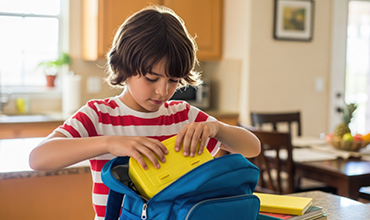
Backpacks carry more than books, papers, and lunchboxes. They can also hold a few simple items that encourage healthy habits throughout the day.
Have your child help create a list before shopping. Essentials may include a refillable water bottle, a small pack of tissues, and a travel-size bottle of hand sanitizer. Depending on school policies and your child’s needs, lip balm or a small package of wipes may also be useful.
These simple items encourage independence while supporting healthy daily routines.
Have the Drinking Fountain Conversation
Remind children that it is okay to share smiles and ideas, but not germs.
Teach them how to use drinking fountains without placing their mouths directly on the fountain. If students carry refillable water bottles, encourage them to refill responsibly and avoid sharing bottles with friends.
Keeping a refillable water bottle nearby can also help children stay hydrated throughout the school day.
Prioritize Sleep and Nutrition
Healthy, well-rested students are better prepared to learn.
As the school year approaches, gradually shift bedtime and wake-up schedules closer to school-day routines. Adequate sleep supports learning, emotional regulation, physical health, and overall well-being. Starting the adjustment one or two weeks before school begins can make those early morning alarms much easier.
Nutrition is equally important. A balanced breakfast helps fuel concentration, energy, and learning throughout the morning.
The good news is that breakfast does not have to be complicated. Overnight oats, yogurt parfaits with fruit and granola, whole-grain toast with peanut butter, scrambled eggs, smoothies, and homemade muffins are all nutritious options that can be prepared ahead of time to make busy mornings less stressful.
A little planning helps children leave home ready to learn.
Keep Family Fun in the Routine
The return to school does not mean family fun has to disappear.
Making time for connection helps children manage the transition back to structured schedules. Family walks, game nights, outdoor activities, weekend adventures, and shared meals all provide opportunities to talk about school experiences, friendships, emotions, successes, and challenges.
Building Healthy Habits That Last
Back-to-school season is the perfect time to reset routines and reinforce healthy habits. Simple reminders about handwashing, food allergies, sleep, nutrition, hydration, and personal responsibility can help create healthier classrooms and communities.
By reviewing these habits before school begins, families can help children start the year feeling confident, prepared, healthy, and ready to learn, while keeping germs and illness at bay.
Tracie Seed has won numerous awards for writing, art, and design. She’s the happiest while writing, sewing, painting, or spending time with family.