




Then
Before it became one of Austin’s most photographed landmarks, the Pennybacker Bridge solved a problem. In the late 1970s, the city needed a way to complete Loop 360, connecting north and south Austin. A key priority was minimizing environmental impact on the scenic Colorado River and Lake Austin area.
Percy V. Pennyback, an engineer with the Texas Department of Highways and Public Transportation, pioneered the bridge’s design west of downtown. He proposed using weathering steel, a material that eliminates the need for paint while allowing the structure to age naturally and blend with the surrounding hills and limestone cliffs. It was a forward-thinking approach that respected the landscape rather than competing with it.
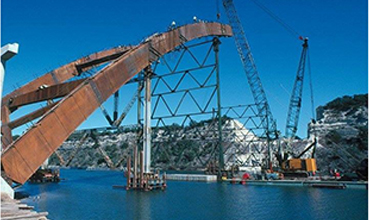
Construction began in 1979. Stretching 1,150 feet across Lake Austin, with a road deck rising 70 feet above the water, the arched bridge was built entirely from land, with no scaffolding placed in the lake. The structure required more than 600 million pounds of steel and 3,400 tons of concrete. This method was chosen deliberately to protect the lake’s natural environment during construction. Engineers erected large temporary towers to support the massive arch ribs as the bridge took shape. Once complete, the towers were removed, leaving a clean span that appears almost effortless.
When the bridge opened in December 1982, it quickly became a beloved landmark recognized for balancing engineering and nature. At the time, it was the second bridge of its type built in the world and one of the longest single-span steel arch bridges ever constructed.
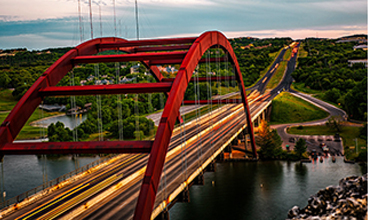
Today, the Pennybacker Bridge is more than a way across Lake Austin via Loop 360, also known as the Capital of Texas Highway. Its 600-foot arch, 72 steel cables, and uniform rusty hue, often likened to a copper penny, have made it a symbol of Austin. Tourists take a short, rocky hike to the overlook for sweeping views of the bridge, the lake, and the surrounding Hill Country.
Locals return again and again to watch the light shift across the water and steel. Sunrise and sunset turn the bridge into a moving painting, different every time. It is a place for photo shoots, engagements, and quiet moments, shared by visitors and residents alike.
With roughly 50,000 vehicles crossing each day, the bridge carries two lanes of traffic in both directions, along with a six-foot-wide pedestrian and bike lane. A southbound turnaround allows limited parking beneath the bridge for those who want to linger and take in the views.
At a December 12, 2024, Austin City Council meeting, members voted unanimously to move forward with eminent domain proceedings to acquire 1.1 acres of land bordering the Pennybacker overlook for parking, along with an additional 1/3-acre easement for a sidewalk, trail, and recreational use. The decision reflects the city’s ongoing effort to manage growing crowds while improving safety and access.
Open year-round, the bridge’s legacy runs deeper than a perfect photo. With a $10 million price tag, the Pennybacker Bridge represents money well spent and a lasting reminder of Austin’s effort to grow while honoring the landscape that defines it.
Tracie Seed, an Austinite, has won numerous awards for writing, art, and design. She’s the happiest while writing, sewing, painting, or spending time with family.