



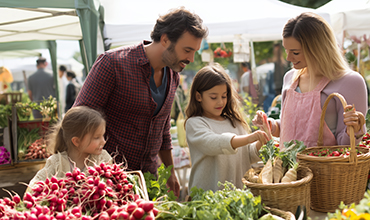
While the holidays are filled with twinkling lights, trays of sweets, and seasonal scents, they also present an exciting and fun opportunity for families to cultivate a healthy habit: shopping local farmers markets.
With colorful vendor offerings, fresh air, tasty treats, and plenty of activity, farmers markets are more than a place to buy groceries. They offer families opportunities to teach children healthy habits, financial literacy, and an appreciation for shopping locally.
- A Feast for the Senses
With produce in every color, the smell of kettle corn, live music, and the bustle of shoppers, farmers markets are a sensory wonderland. They also offer the chance to create lasting memories. Parents often find that children are more open to trying new foods when they take part in choosing them.
For young children, the market is an exciting place to learn colors and the names of produce and other items. Older children can help plan a menu and shop for ingredients to cook a special recipe. Even picky eaters may jump at the chance to choose something new to taste or at least enjoy learning how to pick out quality foods they already like.
These activities promote healthier eating by making children active participants in food choices. The process gives them a sense of ownership and sparks curiosity about what ends up on their plates.
- Money Lessons That Stick
Farmers markets are ideal settings for teaching financial health. Giving your child a few dollars and letting them choose what to purchase can build budgeting and decision-making skills. Children quickly learn that a dollar goes further when spent wisely.
Give your child a budget for a gift and guide them through the process, including counting money and figuring out change. This teaches practical financial skills and gives parents the chance to model polite conversation with vendors, consider options the recipient would enjoy, and emphasize the importance of buying locally.
These lessons support social and emotional health by strengthening communication skills, building confidence in decision-making, and fostering empathy.
- Community Connections
Shopping at farmers markets is about people. Children meet farmers, bakers, and artisans face-to-face, creating a human connection to what they eat and use. Products do not magically appear in stores. They are grown, created, and prepared by hardworking hands. Conversations with vendors can transform a simple shopping trip into a meaningful and inspiring experience.
The experiences children gain at farmers markets extend beyond healthy eating and financial literacy. They learn social skills by interacting with vendors, patience while waiting in line, and responsibility as they handle money or carry purchases. They also discover that food choices matter not only for their own health but for the environment and the community.
- Healthy Habits in Motion
Fresh fruits, vegetables, and whole foods form the foundation of good nutrition. Health is also about balance, activity, and connection. Farmers markets bring these elements together. Families walk, talk, and explore while stocking up on nutrient-rich foods, and they enjoy the mental health benefits of being outdoors in the fresh air and sunshine.
Slowing down, browsing the market, and moving to live music offer a kind of self-care. During a season filled with rushing, visiting a farmers market can be a refreshing pause and a reminder that food is more than fuel. It is culture, tradition, and human connection.
- Traditions with Local Flavor
Seasonal farmers markets are especially festive. In addition to food, many feature holiday treats and unique gifts. Instead of crowded grocery stores and malls, families can shop for homemade jams, fresh vegetables for the holiday table, or ornaments crafted by local artisans. Children can select small gifts for teachers, friends, or siblings while learning the joy of giving thoughtfully.
Cooking with farmers market ingredients can also become a cherished holiday tradition. Imagine a family working together to prepare a meal based on produce chosen that morning. Children can proudly say, “I picked this,” as they help serve a dish or dessert. Holiday recipes take on new meaning when they are made with fresh, local ingredients chosen by small hands eager to help.
- A Gift That Lasts a Lifetime
As parents, we want to give our children more than toys or gadgets during the holiday season, even though those items have their place on wish lists. We want to offer lessons that encourage healthy living on every level. One of the best ways to do that is to weave learning into fun activities so children do not even realize they are building lifelong skills.
A weekend morning at the farmers market is not flashy, but the skills, lessons, and memories children gain will outlast any trendy gift. They learn to appreciate healthy food, manage money, connect with their community, and value experiences over things.
Farmers markets are open year-round in Austin and throughout Central Texas. By making them part of family life, parents can provide not just groceries but guidance, not just gifts but grounding, and not just meals but memories.
See Austin Family Magazine calendar for farmers market events.
Tracie Seed, an Austinite, has won numerous awards for writing, art, and design. She’s the happiest while writing, sewing, painting, or spending time with family.